
Loyalty App Users' Smaller Grocery Baskets
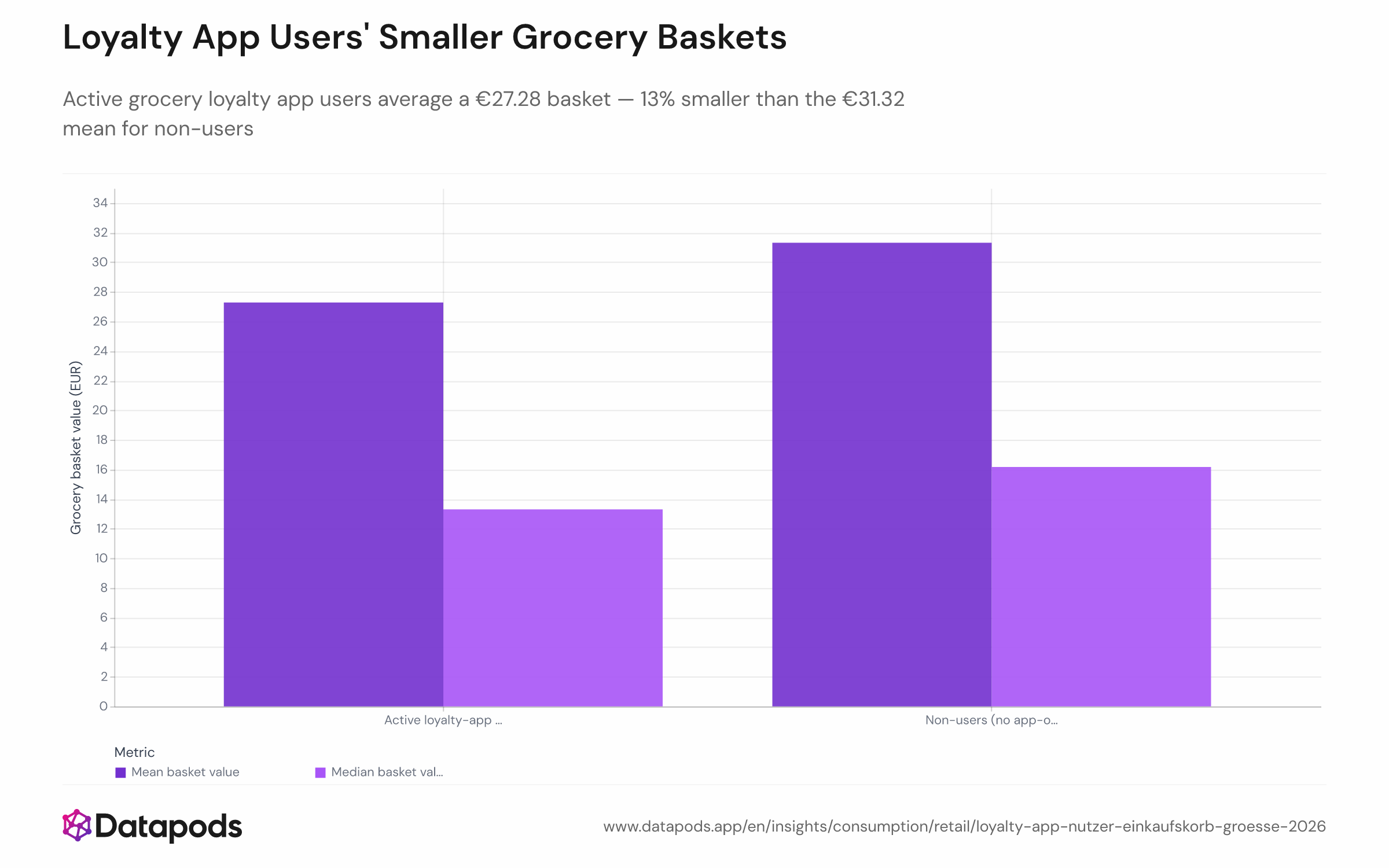
Review Jan–Aug 2026: Active grocery loyalty app users average a €27.28 basket — 13% smaller than the €31.32 mean for non-users
Info
- Sample size
- n = 2,296
- Data date
- Jan–Aug 2026
- Segment
- All segments
- Platform
- Browsing, Emails
- Market
- Germany
Analysis
Active users of grocery loyalty apps (Lidl Plus, Rewe, Netto, or Penny) averaged a €27.28 grocery basket in 2026, compared with €31.32 for non-users — 13% smaller by mean and 18% smaller by median (€13.31 vs €16.17). The gap is specific to grocery: the same two groups spent virtually identically across all retail categories combined.
Why app users buy less per trip, not less overall
Aldi Süd's "Günstig ohne Bonus-App" campaign claimed that loyalty apps lead shoppers to spend up to 30% more — a figure cited in the Aldi press release referencing third-party loyalty research. The basket data here tells a different story: grocery loyalty app users average smaller baskets per transaction, not larger ones. A likely explanation is selection: shoppers who actively open loyalty apps tend to be more price-conscious, making more frequent but smaller shopping trips and splitting purchases across stores to chase coupons. The Verbraucherzentrale Bundesverband has noted that the real monetary savings from grocery apps often fall in the 0.75–2.29% range per shop — modest enough that active users may be optimising trip frequency rather than basket size. The absence of any basket-size gap across all retail categories confirms this is a grocery-specific behaviour pattern, not a general difference in purchasing power between the two groups.
This analysis is based on public segment data. For deeper cuts, use our Enterprise interface.
Methodology
Grocery basket size is measured as the per-order spend in euros derived from email receipt data, covering purchases at the four grocery loyalty app retailers (Lidl, Rewe, Netto, Penny) from January to August 2026. Orders are deduplicated by order number and capped at €2,000 to remove clear outliers. Active loyalty app users are defined as those who opened at least one of the four apps at least once in the observation period. Non-users are drawn from the same population, with no app opens recorded for any of the four apps. Both groups are compared on grocery spend and on total spend across all retail categories.
These insights are based on the Datapods Panel. Our data comes exclusively from users who are compensated for their anonymity. Become part of the panel & earn from your data