
SHEIN & Temu vs H&M & Zara: Basket Size vs Frequency
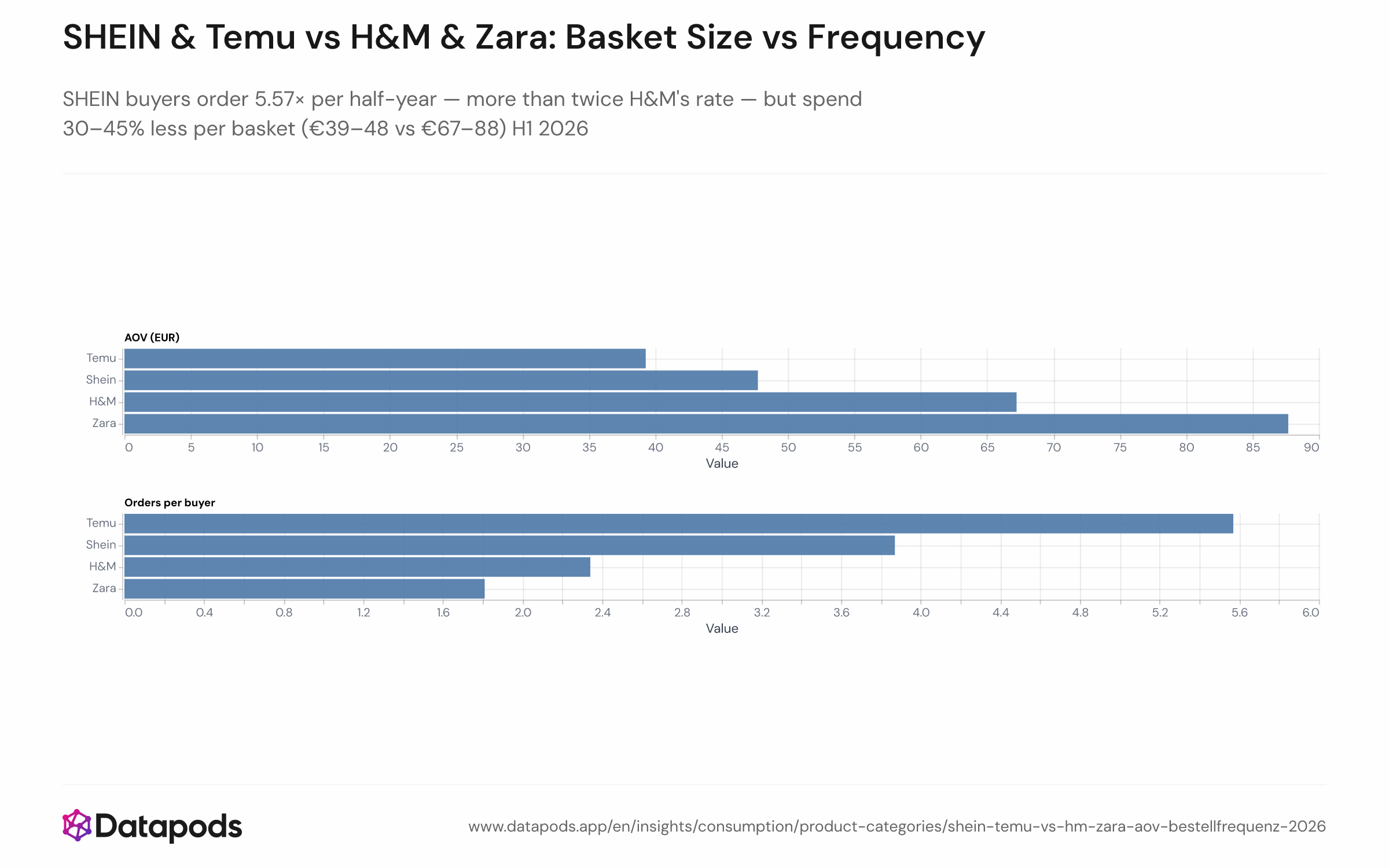
Review H1 2026: SHEIN buyers order 5.57× per half-year — more than twice H&M's rate — but spend 30–45% less per basket (€39–48 vs €67–88) H1 2026
Info
- Sample size
- n = 3,104
- Data date
- H1 2026
- Segment
- All segments
- Platform
- Purchases
- Market
- Germany
Analysis
German online shoppers engage with ultra-fast fashion on fundamentally different terms than with established European retailers. In H1 2026, SHEIN buyers averaged 5.57 orders at around €39–48 per basket, while H&M buyers placed 2.34 orders at €67–88. The result: total half-year spend per buyer is structurally comparable — but buying behavior, return risk, and logistics economics are entirely different.
Two models, one wallet
The ultra-fast fashion pricing strategy — converting trend curiosity into high-frequency, low-commitment micro-baskets — is the core competitive weapon both SHEIN and Temu deploy against EU incumbents. Zara's figures (1.81 orders, ~€88 basket) reflect a higher-considered purchase mindset. The EU's €150 customs reform, effective July 2026, introduces a €3 duty per item on China-direct shipments and is already showing up in consolidation behavior: China-platform basket sizes rose 38% in July–August 2026 as buyers grouped items to offset per-shipment costs. See the basket-size impact after the July 2026 customs change.
This analysis is based on public segment data. For deeper cuts, use our Enterprise interface.
Methodology
Basket-level average order values (AOV) and orders-per-buyer averages are calculated from email-confirmed purchases by verified German buyers on SHEIN, Temu, H&M, and Zara in H1 2026 (January–June). Each order is counted once; outlier baskets above €5,000 are excluded. Zara figures are directional due to a smaller buyer sample.
These insights are based on the Datapods Panel. Our data comes exclusively from users who are compensated for their anonymity. Become part of the panel & earn from your data