
Men 35–44 Spread Across All Purchase Segments
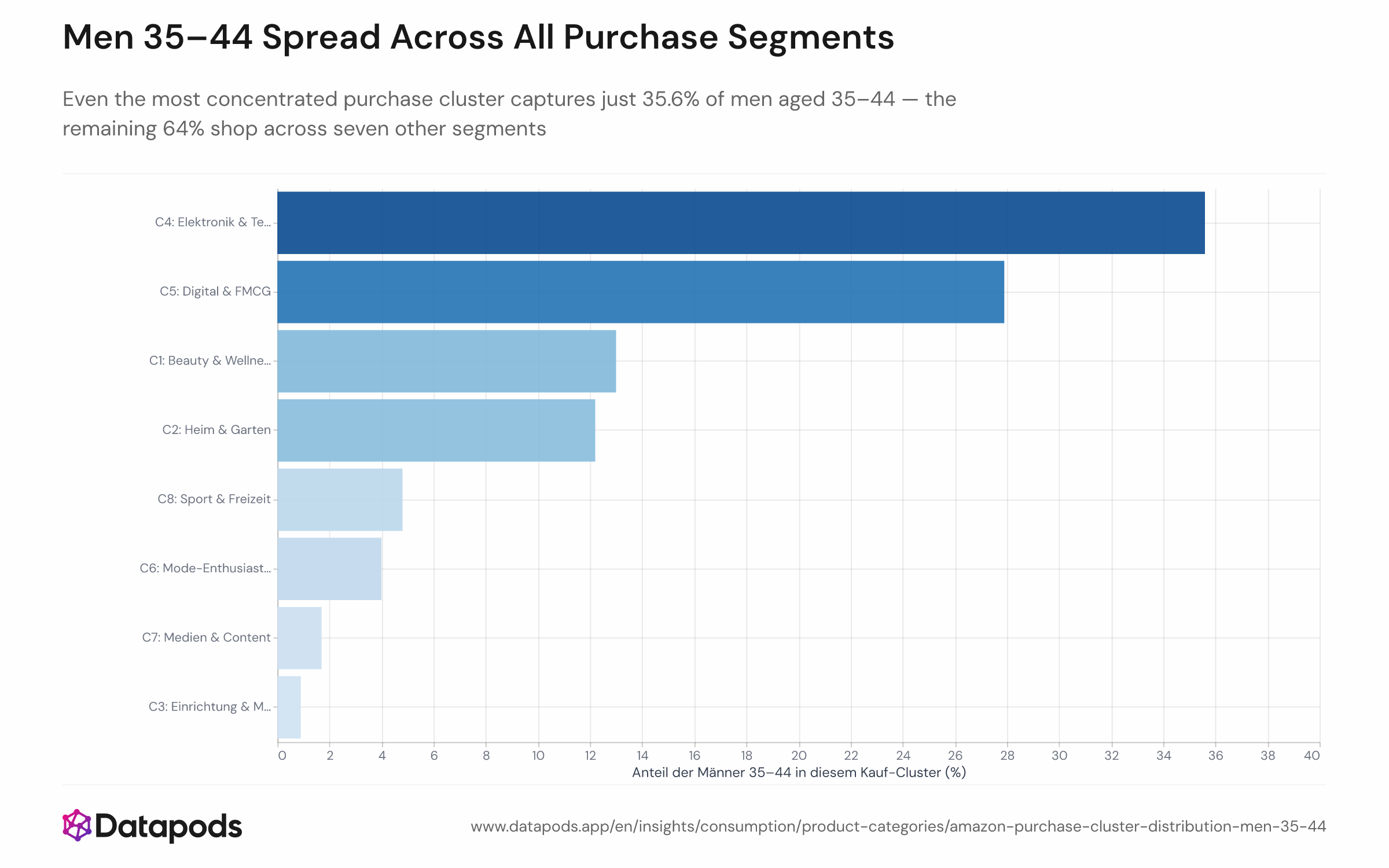
Review 2024–2025: Even the most concentrated purchase cluster captures just 35.6% of men aged 35–44 — the remaining 64% shop across seven other segments
Info
- Sample size
- n = 2,226
- Data date
- 2024–2025
- Segment
- m · 35-44
- Platform
- Amazon, Email
- Market
- Germany
Analysis
Electronics & Tech is the single largest purchase cluster for men aged 35–44, yet it claims only 35.6% of this group — meaning nearly two in three men in this demographic buy primarily in categories like groceries, fashion, home & garden, or sports.
Demographics are a poor proxy for what people buy online
This fragmentation has direct consequences for advertisers and brands targeting the 35–44 male bracket. Germany's e-commerce market — Europe's largest at over €88 billion in 2024 — rewards behavioural precision over demographic assumptions. Electronics consistently leads Amazon.de sales volume, but demographic profiles alone explain just over 1% of the variation in which purchase cluster a shopper actually belongs to. A man in his late thirties is almost as likely to be a Digital & FMCG buyer (groceries + software) or a Home & Garden enthusiast as he is to be an electronics shopper. For targeting and audience planning, purchase-category signals therefore carry far more predictive weight than age or gender alone.
This analysis is based on public segment data. For deeper cuts, use our Enterprise interface.
Methodology
The distribution covers German online shoppers aged 35–44 who identified as male and had verifiable purchase records from Amazon orders and email receipts. Shoppers were grouped into eight purchase-behaviour segments using cluster analysis on actual product category data, mapped to a standardised retail taxonomy. The share shown for each segment reflects what proportion of men aged 35–44 falls into that cluster.
These insights are based on the Datapods Panel. Our data comes exclusively from users who are compensated for their anonymity. Become part of the panel & earn from your data