First-Party Data: What It Is, Types and Why It Wins
What is first-party data? How it differs from second-, third- and zero-party data, its types and examples, and why it wins after cookies.
3 min read
As third-party cookies fade, the data you collect yourself is becoming the most valuable asset in marketing. That data has a name: first-party data.
What is first-party data?
First-party data is information a company collects directly from its own audience, with consent. It comes from your website, app, purchases, emails, surveys and support, the interactions people have with you.
Because it is collected first-hand and permissioned, it is accurate, unique to you and compliant, unlike data bought from third parties.
First-, second-, third- and zero-party data
The "party" describes how far the data is from the person it is about:
| Type | Source | Example |
|---|---|---|
| Zero-party | Given intentionally by the customer | Preferences, quiz answers |
| First-party | Collected directly from your interactions | Purchases, site behavior, emails |
| Second-party | Another company's first-party data, shared | A partner's audience |
| Third-party | Aggregated and sold by data brokers | Bought audience segments |
Zero- and first-party data are owned and consented. Third-party data, the backbone of the old ad model, is disappearing as browsers drop cookies.
Types and examples of first-party data
First-party data spans several categories:
- Behavioral: pages viewed, products browsed, cart actions.
- Transactional: purchases, order value, frequency.
- Declared: account details, preferences, survey answers.
- Engagement: email opens, app usage, support contacts.
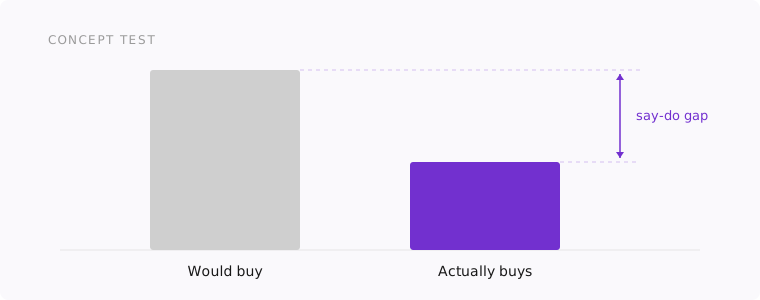
The richest of these is behavioral data, because it reflects what people do, not what they say. A robust market segmentation is built on exactly this.
Why first-party data matters
Three shifts make first-party data decisive:
- The end of third-party cookies removes the old targeting backbone.
- Privacy regulation (GDPR) rewards consented, first-hand data.
- Accuracy: data from real interactions beats inferred segments.
First-party data is not just compliant; it is simply better signal.
Building a first-party data strategy
A first-party data strategy has three moves:
- Collect: give people a reason to share, through value and clear consent.
- Unify: bring the data together across touchpoints into one view.
- Activate: use it for personalization, product and measurement.
The goal is a compounding asset competitors cannot simply buy.
First-party data beyond your own site
Most first-party data stops at your own four walls: your site, your app, your customers. That is powerful but narrow; it only shows the slice of behavior that happens with you.
A consented panel extends first-party data to the whole market: real, permissioned behavior across purchases, browsing and media, from thousands of participants who agreed to share it.
REWE's own site only sees REWE visits. In the panel, the same customers also browse Kaufland.de (46%) and Lidl.de (41%).
That comes from Datapods panel data: first-party data stops at your own walls; your customers' behavior does not. A consented panel closes exactly that gap between your own view and the whole market.
The Datapods panel sits at the consented end of that spectrum: over 25,000 people who chose to opt in and share what they actually buy and do. It combines zero-party consent with real first-party behavior, never inferred third-party segments.
Frequently asked questions
- What is first-party data?
- First-party data is information a company collects directly from its own audience, with consent, from its website, app, purchases, emails and surveys. It is accurate, unique to the company and compliant.
- What is the difference between first-party and third-party data?
- First-party data is collected first-hand from your own interactions, with consent. Third-party data is aggregated and sold by data brokers, with no direct relationship to the person, and is disappearing as browsers drop cookies.
- What is the difference between first-party and zero-party data?
- Zero-party data is given intentionally by the customer (preferences, quiz answers). First-party data is observed from their interactions with you (purchases, site behavior). Both are owned and consented.
- Why is first-party data important?
- Third-party cookies are ending, privacy regulation rewards consented data, and data from real interactions beats inferred segments. First-party data is both compliant and simply better signal.