Influencer Marketing: How It Works (Costs, KPIs, ROI)
How does influencer marketing work? Platforms, costs, KPIs and ROI, plus how to find the creators your audience actually watches.
3 min read
A recommendation from someone you follow lands differently than an ad. That is what influencer marketing relies on when it picks the right creators.
What is influencer marketing and how does it work?
Influencer marketing is brands collaborating with creators who have their own reach and the trust of their community. Instead of advertising directly, a brand communicates through the creator's voice and credibility.
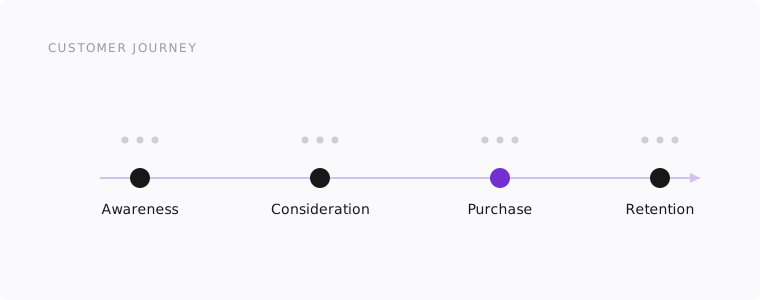
The process: find suitable creators, brief them, publish content, and measure the impact. What decides is not raw reach, but whether the creator's community fits the brand. As a paid touchpoint, it sits within the customer journey, usually in the awareness and consideration phases.
Platforms for influencer marketing
Each platform has its own formats and audiences:
- TikTok: short, viral videos, generally younger audiences.
- YouTube: long formats, reviews, high credibility.
- Instagram: image and story, broad reach, shopping features.
The choice of platform follows the audience, not the trend.
Influencer sizes: nano to mega
Not every collaboration needs millions of reach. Creators are grouped by follower count into size tiers with different strengths:
| Size | Followers | Strength |
|---|---|---|
| Nano | under 10,000 | highly engaged, high trust, cheap |
| Micro | 10,000–100,000 | clear niche, good value for money |
| Macro | 100,000–1M | broad reach, professional collaboration |
| Mega | over 1M | maximum awareness, high cost, lower engagement |
Rule of thumb: the smaller the account, the tighter the bond with the community, but the smaller the reach. For sales, micro creators often beat the big names.
What influencer marketing costs
Costs depend on reach, format and exclusivity. Nano and micro creators are cheaper and often more engaged, large accounts more expensive but broader. Beyond the fee, factor in product, production and management time.
As a rough guide, the range runs from a few hundred euros for nano creators to five figures for mega accounts per collaboration. Payment in kind (products instead of money) is common with smaller creators.
Measuring KPIs and ROI
Reach and likes are activity metrics, not impact. More telling are:
- Engagement rate: interactions ÷ followers × 100. It shows how active a community really is, often more telling than follower count alone.
- Conversions: purchases, sign-ups or downloads, measured via an individual code or link.
- CPM and CPE: cost per thousand impressions and per engagement, for comparing creators.
- ROI: revenue generated relative to total cost.
Without clean measurement, influencer marketing stays a gut feeling. Decide on the metric before the campaign, not after.
Strategy in five steps
- Set the goal: reach, trust or sales?
- Define the audience and platform.
- Select suitable creators.
- Balance the brief with creative freedom.
- Measure and optimize.
Trends in influencer marketing
A few shifts are shaping the field right now:
- Smaller beats bigger: brands move budget to nano and micro creators with tighter communities.
- Long-term partnerships instead of one-off posts, because recurring mentions read as more credible.
- Video first: short formats on TikTok, Reels and Shorts dominate reach.
- More measurability: affiliate codes and tracking make the revenue contribution visible, away from raw reach.
Above every trend sits the same question: does your own audience actually watch these creators?
Reach is not relevance
Creator selection usually goes by follower count and reach. Both say little about whether the creator's community fits the brand and buys the category at all.
Behavioral data provides the decisive signal: it shows which creators your own customers really follow and watch, and whose audience actually buys the category.
Across hundreds of creators, customer-affinity holds roughly steady from nano to mega (1.75x–3.5x), and the mega-reach tier is the best for none of the three brands.
That comes from Datapods panel data: follower count says nothing about who actually buys. The lever is not size, but the right niche creator.
Our product for data-driven creator matching finds the creators your audience actually watches, from real behavior rather than follower counts.
Frequently asked questions
- What is influencer marketing?
- Influencer marketing is brands collaborating with creators who have their own reach and the trust of their community, communicating through the creator's voice and credibility.
- How much does influencer marketing cost?
- It depends on reach, format and exclusivity. Nano and micro creators are cheaper and often more engaged, large accounts more expensive but broader. Add product, production and management costs on top.
- Which KPIs matter in influencer marketing?
- Engagement rate, conversions (purchases or sign-ups via a code or link) and ROI. Plain reach and likes are activity metrics, not impact.
- Which platform is best for influencer marketing?
- It depends on the audience: TikTok for short, viral videos and younger audiences, YouTube for long formats and reviews, Instagram for image, story and shopping.