Target Audience Analysis: Methods, Example and Template
What is target audience analysis? Methods, criteria, personas and an example, plus how to define your audience from real behavior, not assumptions.
3 min read
Who is your target audience, really? Target audience analysis answers that not with a guess, but with traits, needs and behavior.
What is target audience analysis?
Target audience analysis is the systematic description of the customers that matter most for an offering: their traits, needs and behavior. It answers the question of who you want to reach, and forms the basis for product, message and channel choice.
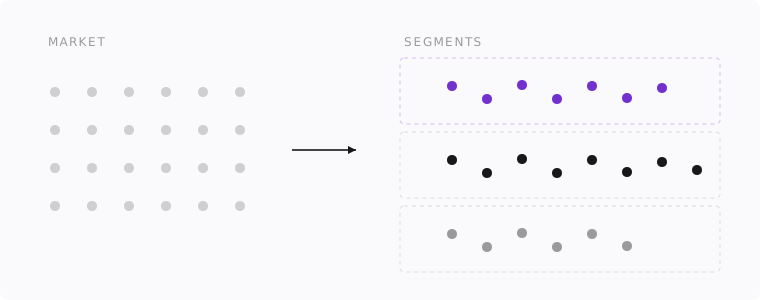
Unlike market segmentation, which divides a market into segments, target audience analysis describes the chosen segments in detail. It asks not how to split, but who you are dealing with.
Methods and criteria of target audience analysis
An audience is described along several dimensions:
- Socio-demographic: age, gender, income, occupation, region.
- Psychographic: values, lifestyle, attitudes, motives.
- Behavioral: purchase behavior, media usage, brand loyalty.
Only the combination produces a tangible picture. Demographics alone describe no one completely, which is why the behavioral criteria are usually the most telling.
Creating a persona
A persona condenses the audience into a fictional but data-based person. It makes abstract traits concrete and helps teams decide from the audience's point of view.
A solid persona typically includes:
- Socio-demographics: age, occupation, location.
- Goals and motives: what does the person want to achieve?
- Obstacles and frustrations: what holds them back?
- Behavior: where do they do their research, what do they buy?
- Channels: where can they be reached?
The more of this is built on real data rather than gut feeling, the more solid the persona.
Target audience template
The persona criteria condense into a reusable template. Each row is filled with real data or a stated assumption:
| Field | Guiding question |
|---|---|
| Socio-demographics | Age, occupation, location? |
| Goals and motives | What does the person want to achieve? |
| Obstacles | What keeps them from buying? |
| Behavior | What do they buy and search for, which media do they use? |
| Channels | Where can they be reached? |
A good template forces a split between evidence and assumption: what rests on data, and what is still a hypothesis?
Example
A meal-prep box brand describes its audience not as "women 25 to 40" but through behavior: orders delivery regularly, searches for "quick healthy cooking", uses fitness apps. That becomes the persona "the time-pressed health-conscious", which shapes product and messaging. Two people of the same age end up in completely different audiences.
Target audience analysis in B2B
In B2B, the audience is not an individual but the buying center: industries, company sizes and the roles involved (users, decision-makers, procurement), each with their own goals and concerns.
Audiences built on behavior
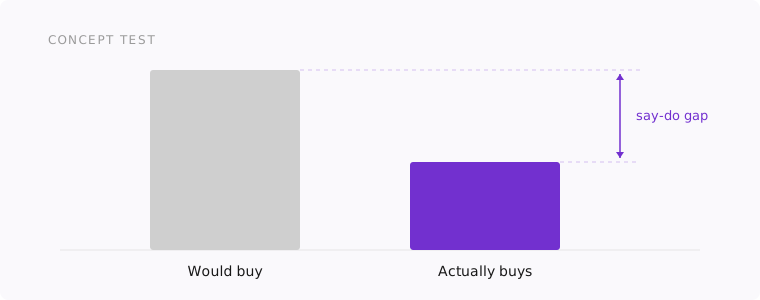
Most target audience analysis relies on surveys and assumptions. Both describe what people say about themselves, not what they do. The result is personas that sound good but miss the real customer.
Behavioral data reverses that: it describes the audience through actual purchases, searches and media usage.
Among people who report no children yet buy baby products, 62% show a recurring, consumable pattern consistent with caring for a child, not a one-off gift.
That comes from Datapods panel data: the survey says one thing, the basket says another. Building an audience from self-reports alone excludes exactly the buyers behavior clearly identifies.
Our product for behavior-based audiences instead describes the audience from what people really buy, search and use, drawn from a panel of more than 25,000 participants. The persona becomes less guesswork and more observation.
Frequently asked questions
- What is target audience analysis?
- Target audience analysis is the systematic description of the customers that matter most for an offering: their traits, needs and behavior.
- What methods are used for target audience analysis?
- Common ones are socio-demographic, psychographic and behavioral analysis, plus the persona method. In practice they are combined.
- What is the difference between target audience analysis and market segmentation?
- Market segmentation divides the total market into segments (the how of splitting). Target audience analysis then describes the chosen segments in detail (who they are and how they behave).
- How do you create a persona?
- A persona condenses the audience into a fictional but data-based person with a name, situation, goals and obstacles. It is built on data, not gut feeling.