Market Analysis: Methods, Structure and Example
What is a market analysis? Methods, structure, an example and how to read demand and the market from real behavior instead of dated reports.
3 min read
How big is the market, where is it heading, and where is room for you? A market analysis answers those questions with numbers instead of gut feeling.
What is a market analysis?
A market analysis is the systematic study of a market: its size, structure, demand, development, competitors and target audiences. The goal is a solid picture of whether and how a market can be served.
The market analysis is the broad frame. Competitive analysis is one building block of it, as are audience and demand analysis.
Market size is usually thought of in three levels:
- Total market (TAM): the theoretical total market potential.
- Addressable market (SAM): the part your offering can serve.
- Obtainable market (SOM): the share you can realistically win.
This layering prevents the most common misjudgment: confusing the total market with your own potential.
Methods of market analysis
- Secondary research (desk research): evaluate existing studies, statistics and reports.
- Primary research: your own surveys, interviews and observation.
- Competitive and audience analysis: as building blocks of the market view.
- Behavioral data: observed purchase and search activity instead of stated intent.
In practice you combine several methods. Secondary data provides the frame; your own data and behavioral data fill it with substance.
Structure of a market analysis (step by step)
- Define and size the market: total, addressable and obtainable market.
- Capture demand and trends: where is the market heading?
- Analyze the competition: who dominates, where is a gap?
- Describe the audiences: who buys, and why?
- Derive opportunities and risks: what does it mean for your strategy?
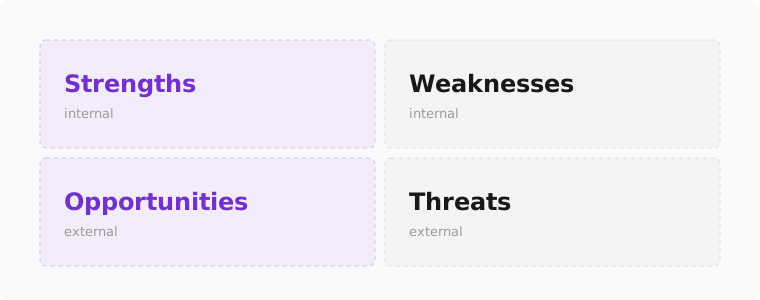
The final step, ordering opportunities and risks, is where a SWOT analysis fits. This structure is also the backbone of the market analysis in a business plan.
Example
An e-bike maker examines the German market: how big is the total market, how fast is it growing, who dominates, and where is a gap? The analysis shows a growing market with strong incumbents, but a gap in affordable city bikes on a subscription model. That entry point is easier than the contested premium segment.
Market analysis, market monitoring and market research
The terms overlap but mean different things:
- Market analysis: the one-off, deep study of a market at a point in time.
- Market monitoring: the continuous tracking of change over time.
- Market research: the umbrella term for the systematic gathering of market data.
Tools for market analysis
Tools mainly supply data: statistics portals and industry reports for market size, SEO and trend tools for demand, and web analytics and panels for actual behavior. The scoring and the decision remain the job of the analysis.
Seeing demand before it reaches the report
Classic market analysis relies on published studies, industry reports and surveys. Those sources are aggregated and lag reality: by the time a trend is in the report, it has often already played out.
Behavioral data supplies the market side in the present. It shows what people search for today, what they actually buy, and how demand shifts from week to week.
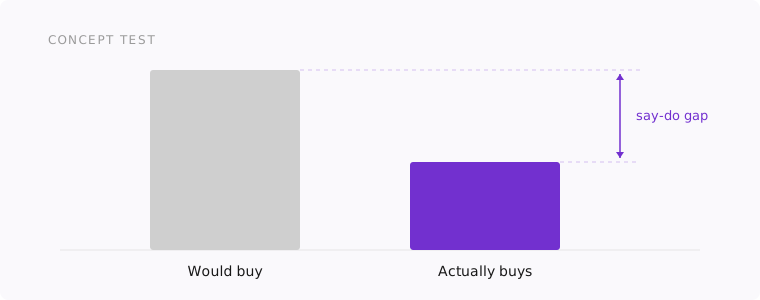
Browsing attention for Health & Beauty rose 4.7 points, leaving no trace in real spend. Only Subscriptions gained in actual spend share (+2.1pp).
That comes from Datapods panel data: measuring a market by search trends and attention mistakes interest for demand. Only checking it against real spend shows which movement actually means revenue.
Our product for real demand data measures the market from daily-updated purchase and search behavior. A snapshot in a report becomes a continuous read.
Frequently asked questions
- What is a market analysis?
- A market analysis is the systematic study of a market: its size, structure, demand, development, competitors and target audiences, in order to assess whether and how the market can be served.
- What methods are used for market analysis?
- Secondary research (desk research), primary research (your own surveys), competitive and audience analysis as building blocks, and increasingly behavioral data from observed purchase and search activity.
- How is a market analysis structured?
- Typically: define the market and size it, capture demand and trends, analyze the competition, describe the audiences, and derive opportunities and risks. This structure is also the backbone of the market analysis in a business plan.
- What is the difference between market analysis, market monitoring and market research?
- A market analysis is the one-off, deep study at a point in time. Market monitoring tracks change continuously. Market research is the umbrella term for the systematic gathering of market data.