Customer Retention: Instruments, Measures and Metrics
What is customer retention? Instruments, measures and the key metrics (churn rate, retention rate, CLV), plus how to spot churn early from behavior.
3 min read
Winning a new customer costs several times more than keeping an existing one. That is exactly why retention is one of the most underrated levers in marketing.
What is customer retention?
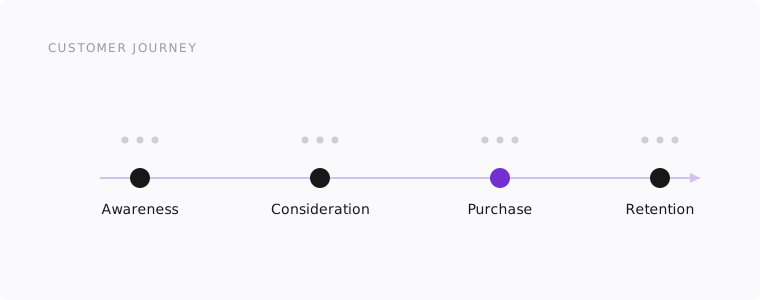
Customer retention covers all the measures that keep customers loyal to a brand and buying again. It rests on satisfaction, trust and switching barriers: staying has to be more attractive than switching. It is the final phase of the customer journey, after the purchase.
Its opposite is churn: the point where a customer stops buying.
Instruments and measures of customer retention
Retention comes not from a single program but from a bundle of instruments:
- Loyalty programs and discounts: economic incentives to stay.
- Service and support: fast, reliable help.
- Personalized communication: relevant offers instead of one-size-fits-all.
- Community and brand: emotional bonding beyond the pure transaction.
Economic incentives work short term, emotional bonding lasts. The strongest retention comes when both combine.
Measuring customer retention: the key metrics
Without metrics, retention stays a feeling. The most important ones:
| Metric | What it measures |
|---|---|
| Churn rate | Share of customers who left in a period |
| Retention rate | Share of customers kept (100 − churn rate) |
| Repurchase rate | Share of customers who buy again |
| Customer Lifetime Value (CLV) | expected total value of a customer |
| Net Promoter Score (NPS) | willingness to recommend |
Rule of thumb: churn rate = churned customers ÷ customers at the start × 100. Even a few points less churn lift customer lifetime value substantially.
How to increase customer retention
Retention grows not from more discounts but from more relevant experiences. Three levers matter most:
- Emotional: a brand customers stand behind holds better than any loyalty point.
- Digital: a personalized app, emails and recommendations that match actual behavior.
- Win-back: re-engage churning customers deliberately, while they can still be reached.
The most effective move is to act early: spot persistently low activity in time and you keep the customer before win-back is even needed.
Customer retention in B2B
In B2B, retention is especially valuable because customers buy less often but at higher value. What matters is personal relationships, contract terms and a service that goes beyond the product.
Spotting churn before it happens
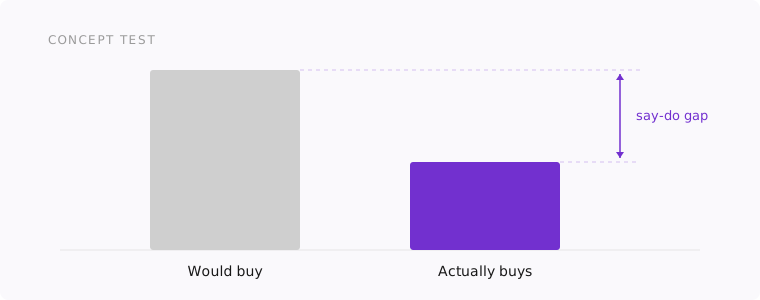
Most companies learn about churn too late: once the customer is already gone, or no longer even answers the survey. Satisfaction surveys measure what customers say, not what they do.
Churn is rarely a sudden cliff. In behavior it shows up as a persistently lower level: churning customers never warm up, while loyal customers hold or grow their frequency.
Churned REWE customers never warmed up: their purchase frequency sat at just 25–39% of loyal customers' level for five months, then stopped abruptly.
That comes from Datapods panel data: there is no warm-up and no gradual decline. Loyal customers you spot by their rising frequency; churners you spot by their persistently flat, low level, long before the last purchase.
Our product for data-driven churn detection spots churners by their persistently low purchase frequency and shows who is at risk while win-back is still worthwhile.
Frequently asked questions
- What is customer retention?
- Customer retention covers all the measures that keep customers loyal to a brand and buying again. It rests on satisfaction, trust and switching barriers.
- What are the instruments of customer retention?
- Loyalty programs and discounts, good service and support, personalized communication, and community and brand bonding. Economic incentives work short term, emotional bonding long term.
- How do you measure customer retention?
- With metrics like churn rate, retention rate, repurchase rate, customer lifetime value (CLV) and the Net Promoter Score (NPS). The churn rate is churned customers divided by customers at the start.
- Why does customer retention matter?
- Keeping an existing customer usually costs far less than winning a new one, and loyal customers buy more often, spend more and refer others. Even a few points less churn lift revenue noticeably.